Clip Installation Process
Precise pushing of U-type clip-on nuts onto a component

In the clip installation process, clip-on nuts or sheet metal nuts are pushed over the edge of a panel.
This joining method is used when it is not possible to insert a thread for a corresponding fastener into the component. This process is also used for components that require large position tolerances for the attachment of additional components.
Clip fasteners provide a quick and inexpensive way to join components. Automated clip assembly is ideal for high-volume production in industries such as automotive trim, appliance assembly, and HVAC equipment, where many clips must be installed quickly. Automating the clip assembly process leads to faster cycle times, consistent quality, and lower labor costs.
What Are U-Type Clips?

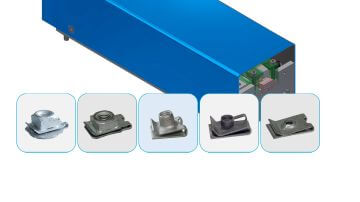
Snap-on clips, also known as clip-on nuts, U-nuts, speed nuts, spire nuts, or sheet metal nuts, are a common type of fastener. They have two parallel legs connected at one end to form a U shape.
One leg usually has a hole or slot, while the other has a threaded section or an offset "nut" area. This grips the fastener (such as a screw or bolt) or provides locking force against the mating surface.

Sheet metal nuts are usually made of spring steel or another flexible metal. Some clips can lock by friction alone for lighter-duty fastening.
The spring tension of the metal holds the clip in place.
The Clip Assembly Process

The clip-on nut is positioned so that the open side of the "U" fits over the edge of the panel. Firm pressure pushes the clip over the edge. The legs are slightly spread apart to accommodate the thickness of the component.
As the legs pass the edge of the panel, they spring inward and clamp down tightly. Once in place, the clip remains secure until a fastener is inserted, eliminating the need for additional tools.
Then, a screw or bolt is inserted through a hole in the panel and into the threaded hole or offset nut of the clip, securing the assembly.
Assembly System for Sheet Metal Nuts
A240-CU Robotic Workstation

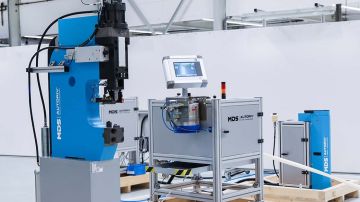
The A240-CU is a robotic assembly system that automatically attaches snap-on nuts to sheet metal components. It is designed to be integrated into a higher-level machine or system.
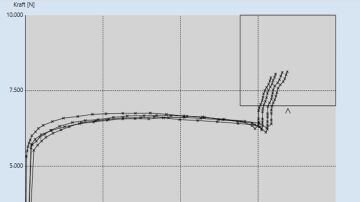
First, the sheet metal nut is shot into place through the shot tube (1). Once the fastener is in the lifting position, the lifting cylinder (2) waits for a signal from the proximity switch (3). The lifting cylinder moves the clip into the push-on position. The position of the fastener is verified by another proximity switch.

A signal is sent to the higher-level system, which instructs the robot to move the component into position. A corresponding signal is sent to the control system. The push cylinder (4) then pushes the fastener over the edge of the component.
An optional feed cylinder provides additional guidance during this step to ensure the clip is positioned precisely. After the setting process, the optional feed cylinder retracts. Then, the push cylinder retracts, followed by the lifting cylinder. A new fastener is only loaded once all of these steps are complete.
Applications

Automotive
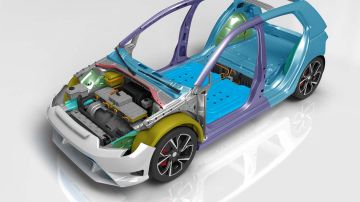
Clips are used throughout vehicle assembly. Sheet metal nuts with screws secure guards and shields under the hood. Clips also attach interior door panels, headliners, wire harnesses, and covers. These applications require quick installation and only modest holding force. Other examples include attaching dashboards, interior linings, license plate brackets, splash guards, and bumper covers.

HVAC and Appliances
In the manufacturing of heating and cooling appliances, speed nuts are used to fasten sheet metal parts, insulating panels, blower housings, and grilles. U-nuts are also used to connect duct sections and mount controls or filters. For HVAC ducting and furnace assemblies, corrosion-resistant metal clips are preferred.
Electronics
Spire nuts secure panels and components in areas where access is necessary. In electronics enclosures, they hold covers or PCBs and manage wiring.
Advantages of Clip-on Nuts
This eliminates the need to tap screw holes in sheet metal or plastic.
One motion to clip the nut on is followed by another to insert the screw. Automated systems can install hundreds of speed nuts per hour, enabling high-speed, high-volume production.
Sheet metal nuts are designed to grip panels without cracking or splitting them.
The snap-on clips stay in place during handling before the final fastening.
The clips can be removed and reinstalled without damaging the panel. This makes them ideal for components that may need to be removed or serviced later.
The spring steel tension prevents loosening in environments with movement.
Request for Quotation
Would you like us to call you back? Leave your telephone number or e-mail, and we will get back to you as soon as possible!