Tolerance Compensation Fasteners
Tolerance compensation fasteners, also known as gap-adjusting fasteners or automatic alignment fasteners, are specialized, multi-element fasteners that adjust to compensate for assembly gaps and variations.
Unlike ordinary nuts or screws, which rigidly clamp parts together, these fasteners have an adjustable, often threaded, element coupled with a fixed base element.
When tightened, the screw moves the adjuster to compensate for clearance or misalignment, forming a precise joint. In practice, the base element is preassembled into a workpiece. The parts are then aligned, and the tolerance compensation system closes the gap when the screw engages the adjuster.
Contact Us
Our customer service will help you with any questions!
How Do Tolerance Compensation Fasteners Work?

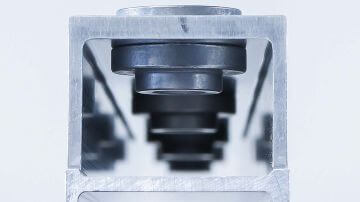
The components are connected using a two-piece fastener. One part is a fixed base element (shown in blue in the image) that is attached to one of the components. The other part is a movable adjuster (shown in brown), which engages with the counterplate later on.
First, the components are aligned to the desired position (step 1 in the image). Then, the screw is inserted through the adjuster (step 2 in the image).
As the screw is tightened, the adjuster moves axially and, in some cases, radially, in order to compensate for any clearance (step 3 in the image). This compensates for tolerances between the parts.
The fastener locks in place once the adjuster reaches its stop, fully compensating for the gap (step 4 in the image). Then, the joint is torqued to specification to ensure a tension-free connection.
When to Use Tolerance Compensation Fasteners?

Whenever a precise fit and easy assembly are needed despite large or unpredictable tolerances, it is recommended to use tolerance compensation fasteners.
They are especially valuable in assemblies where the sum of multiple parts' variances can add up.
Advantages of Tolerance Compensation Fasteners

When accessing the joint from only one side, shims cannot be used and parts cannot be adjusted after tightening. Compensating fasteners self-adjust during installation, often making one-sided or blind assembly possible.
Thanks to their compact design, tolerance compensation fasteners can be used effectively in applications with limited installation space.

Tolerance compensation fasteners ensure an optimal gap profile and prevent stress in products requiring flushness or precise gaps. Examples of these products include instrument panels, and appliance fronts. Furthermore, they eliminate the need for manual shimming or measuring. The adjustable element of the fastener fills any gaps, ensuring a zero-clearance connection when parts are joined together.

Thanks to the built-in adjustment, each joint is uniform, regardless of assembly variability. This results in more consistent production quality and fewer defects.

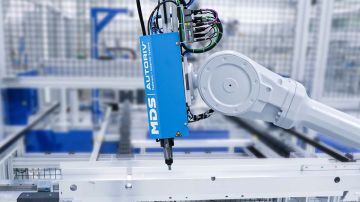
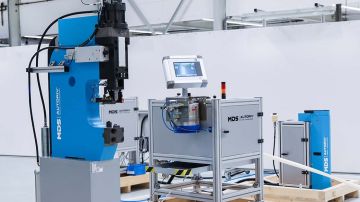
Compensation fasteners eliminate the need for additional alignment steps during robotic and automated installations. They can also be processed effectively under the press. The tolerance compensation system automatically adjusts to the desired alignment when the fastener is set.
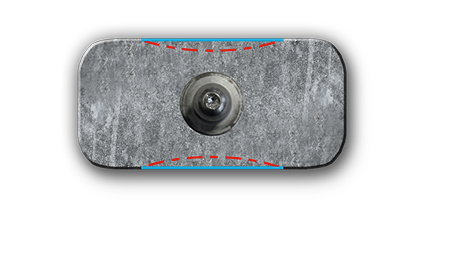
Tolerance compensation fasteners allow the joint to remain flexible internally until the parts are properly aligned. They create tight connections without putting tension on parts. This prevents issues related to distortion and misalignment, such as bending fragile components, warping thin sheets, and stress concentrations.

Tolerance compensation fasteners allow for wider production tolerances and reduce assembly complexity. Combining adjustment and tightening eliminates the need for complex alignment steps, thereby reducing assembly time. This feature, coupled with reducing reliance on precision-machined parts, jigs, and rework, makes the production process more cost-effective.

Some fasteners with tolerance compensation allow parts to be realigned later without disassembly. This enables the screw to be loosened and retightened in order to adjust the fit without changing the clamp force. This increases the product's serviceability in case minor fit issues arise after initial assembly.
Applications
Consumer Appliances (White Goods)

During the manufacturing of appliances such as washing machines, ovens, and dishwashers, sheet metal panels often accumulate tolerances. Tolerance-compensating fasteners precisely align doors and control panels, preventing strain on the material. By absorbing fabrication variances, they prevent warped panels and reduce costly rework.
Electronics
Small misalignments can result in functional or aesthetic defects when mounting sensitive modules such as LCD/LED displays, instrument clusters, and electronic enclosures. Compensation fasteners provide stress‑free, precise mounting. In the field of consumer electronics, they are used to align and secure panels or heat sinks as tolerances accumulate.

Automotive Assemblies
Compensation fasteners are typically used for parts that are affected by tolerances, such as door modules and exterior handles. Precise adjustment of the gap dimensions is useful for applications involving battery trays. Tolerance compensation fasteners also facilitate the assembly of bumpers and front-end modules, ensuring that panels join flush without bending. They can be used to align vehicle displays and headlights properly. These fasteners also allow for the one-sided installation of components, such as sunroofs.
HVAC and Climate Control
In automotive HVAC modules and consumer heating and cooling units, the panels must fit tightly together to prevent rattling and air leaks. Using compensation fasteners between the HVAC blower housing and the dashboard helps prevent vibration and gaps.

Summary
Tolerance compensation fasteners offer alignment and clamping capabilities. This makes assemblies more adaptable to part variation and greatly reduces the effort required for a precise fit.
Overall, compensation fasteners are an elegant solution that improves precision, speeds up production, and reduces costs for applications that require tight fits despite variations in manufacturing tolerances.
Request for Quotation
Would you like us to call you back? Leave your telephone number or e-mail, and we will get back to you as soon as possible!